
Is Dialysis Always Required Before a Kidney Transplant?
Hearing the words “kidney transplant” for the first time can feel overwhelming, and the questions start piling up almost immediately. One of the most common questions patients ask is simple but important: Is dialysis always required before a kidney transplant? The honest answer is no, not always. But the full picture depends on a few personal factors, and understanding them can bring real peace of mind during a stressful time.
Let’s walk through this together, in plain language, so you know exactly where things st
What Exactly Is a Kidney Transplant, and Where Does Dialysis Fit In?
A kidney transplant replaces a failing kidney with a healthy one, usually from a living or deceased donor. Dialysis, on the other hand, is a treatment that filters waste and extra fluid from the blood when the kidneys can no longer do this job well enough on their own.
Many people assume the two always go hand in hand, that dialysis has to happen first and a transplant comes later. That’s true for some patients, but not for everyone.
So, Is Dialysis Always Required Before a Kidney Transplant?
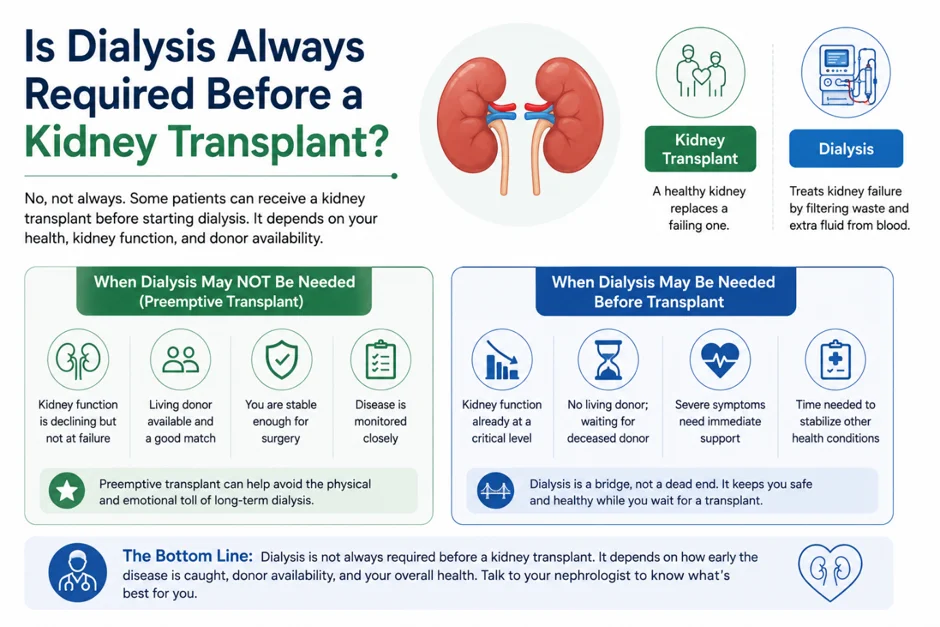
No. Some patients qualify for what’s called a preemptive kidney transplant, meaning they receive a new kidney before ever starting dialysis. This usually happens when kidney disease is caught early enough, and a suitable donor is available at the right time.
That said, most patients in the real world do go through some period of dialysis simply because kidney failure is often diagnosed later, or because finding a compatible donor takes time.
What Is a Preemptive Transplant, and Who Qualifies?
A preemptive transplant is often considered the gold standard when it’s possible, because it can spare patients from the physical toll of long-term dialysis.
Doctors generally consider this option when:
- Kidney function is declining but hasn’t reached complete failure yet
- A living donor, such as a family member, is available and a good match
- The patient is stable enough for surgery without needing dialysis support first
- Regular check-ups have tracked the disease closely, so the timing can be planned rather than rushed
Patients who receive a preemptive transplant often report an easier emotional and physical transition, simply because they avoid the fatigue and lifestyle disruption that dialysis can bring.
When Does Dialysis Become Necessary Before Transplant?
Dialysis usually becomes unavoidable in these situations:
- Kidney function has already dropped to a critical level before a donor is found
- There’s no living donor available, so the patient is waiting on the deceased donor list, which can take months or years
- Symptoms like severe swelling, breathlessness, or dangerous potassium levels appear, and the body needs immediate support
- The patient needs time to stabilize other health conditions before surgery can safely happen
None of this means the situation is hopeless. Dialysis is a bridge, not a dead end. It keeps the body balanced and safe while the search for a suitable kidney continues.
Why This Distinction Actually Matters for Patients
Understanding whether dialysis is required in your specific case helps you plan practically and emotionally. It affects:
- How you manage work, travel, and daily routines
- What your care team monitors month to month
- How urgently a living donor should be sought
- How do you and your family prepare mentally for the road ahead
If you’re newly diagnosed with kidney disease, ask your nephrologist directly whether a preemptive transplant is realistic in your case. Early conversations open up more options later.
The Bottom Line for Patients and Families
Every kidney journey looks different, but no patient has to walk it without guidance.
So, is dialysis always required before a kidney transplant? Not necessarily. Some patients move straight to transplant, while others need dialysis first to stay healthy during the wait. Every case is different, shaped by how early the disease was caught, donor availability, and overall health.
As Dr. Chandan Chaudhari often reminds patients, the goal isn’t to follow a fixed path; it’s to find the safest and most suitable one for each individual. If you’re facing this decision, don’t navigate it alone. Reach out to your nephrologist or transplant team, ask the questions on your mind, and let them guide you toward the option that fits your health best.