
How to increase Immunity after a Kidney Transplant?
A new kidney brings a new chapter, but it also brings a question that keeps many patients up at night: “How do I increase immunity after a kidney transplant without putting my new kidney at risk?” It’s a fair worry, and honestly, one of the most important ones to get right.
Here’s the part that often surprises families: after a transplant, your immune system isn’t weak by accident. It’s kept deliberately calm by medication, so your body doesn’t attack the new kidney as a foreign object. That means “boosting immunity” the way you might after a cold isn’t the goal here. The real goal is building a smarter, steadier defense against infections while protecting your transplant. Let’s break down exactly how to do that.
Why Is Immunity Lower After a Kidney Transplant?
After surgery, you’re placed on immunosuppressant medications. These drugs quiet down your immune system so it doesn’t reject the new organ. It’s a necessary trade-off. Your body gets a functioning kidney, but in exchange, it becomes more vulnerable to infections, colds, and viruses.
This is why transplant patients need a different approach to immunity than the general public. It’s not about ramping things up aggressively. It’s about supporting your body gently and consistently.
What Are the Signs of a Weakened Immune System?
Recognizing early warning signs helps you act quickly instead of waiting for things to worsen. Watch for:
- Frequent colds or infections that take longer to heal
- Unexplained fatigue that doesn’t improve with rest
- Low-grade fever that comes and goes
- Mouth sores or slow-healing cuts
- Digestive issues like persistent diarrhea
If any of these show up, please don’t wait it out. A quick call to your Kidney transplant team can prevent a small issue from becoming a bigger one.
Who Is at Higher Risk of Infections After Transplant?
Some patients need extra vigilance, especially:
- Those in the first six to twelve months post-transplant, when medication doses are usually higher
- People with diabetes or other chronic conditions
- Patients who skip regular follow-up visits
- Anyone exposed to sick family members or crowded spaces without precautions
Knowing your risk level helps your doctor fine-tune your care plan.
How Can You Safely Support Your Immune System?
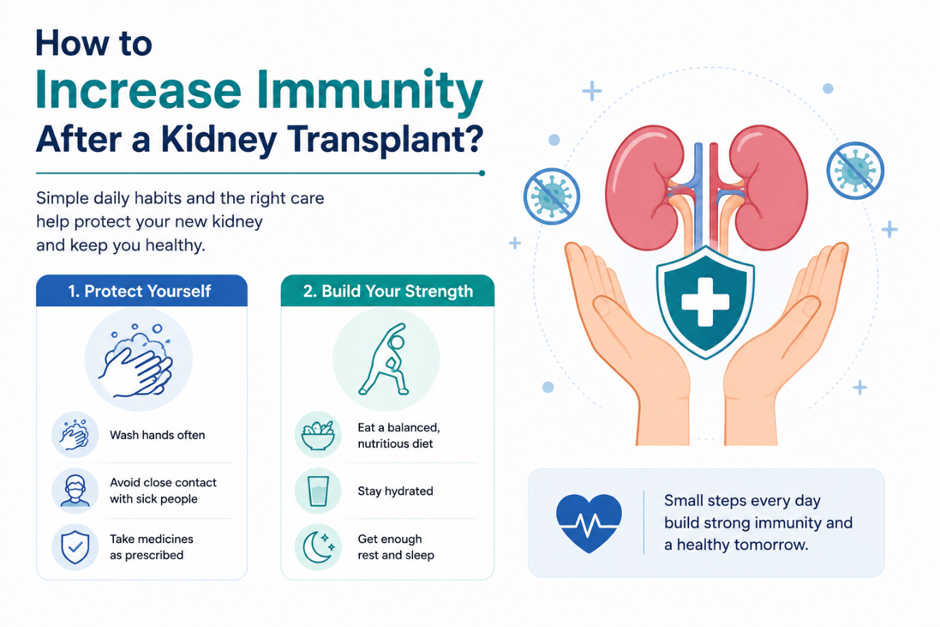
This is where daily habits genuinely matter. None of these replace your medication, but together, they create a strong foundation.
- Never Skip or Adjust Medication on Your Own
Your immunosuppressants are carefully balanced. Even small changes can tip that balance, either toward infection or rejection. Always consult your doctor before adjusting anything.
- Prioritize Hygiene Without Becoming Anxious
Simple habits go a long way:
- Wash hands often, especially before meals
- Avoid close contact with people who are visibly sick
- Keep your living space clean, particularly the kitchen and bathroom areas
- Wear a mask in crowded or high-risk settings when advised
- Eat for Recovery, Not Just Comfort
Good nutrition helps your body function well without overstimulating your immune response. Focus on:
- Fresh fruits and well-washed vegetables
- Lean proteins to support healing
- Fully cooked foods, avoiding raw fish, unpasteurized dairy, and undercooked eggs
- Plenty of water, unless your doctor has advised otherwise
- Stay Physically Active, Gently
Light walking and gentle stretching improve circulation and overall strength. Always check with your transplant team before starting any new activity, especially in the early recovery months.
- Protect Your Sleep and Manage Stress
Poor sleep and chronic stress can affect how well your body handles daily challenges. Aim for consistent sleep, and don’t hesitate to talk to someone if anxiety about your health feels overwhelming.
- Stay Current with Recommended Vaccinations
Certain vaccines are safe and encouraged after transplant, while live vaccines are usually avoided. Your transplant team will guide you on timing and safety.
Prevention Tips for Long-Term Kidney Health
Once you’re past the early recovery phase, staying consistent is key:
- Continue routine blood tests to monitor kidney function and medication levels
- Avoid unnecessary exposure to infections during flu season
- Stay in touch with your nephrologist even during stable periods
- Keep your diet and activity habits steady, rather than making sudden changes
A Reassuring Final Thought
Living with a transplanted kidney means learning a new rhythm, one where protecting your immunity and protecting your new organ go hand in hand. It can feel like a lot to manage at first, but with time, these habits become second nature. You’re not alone in this journey, and small, steady choices really do add up to lasting health.
If you have questions about your recovery or want a personalized plan to strengthen your immunity safely, Dr. Chandan Chaudhari, expert nephrologist in Mumbai is here to help guide you through every step with care and clarity.