
Why Your Kidneys Need More Hydration During Summer
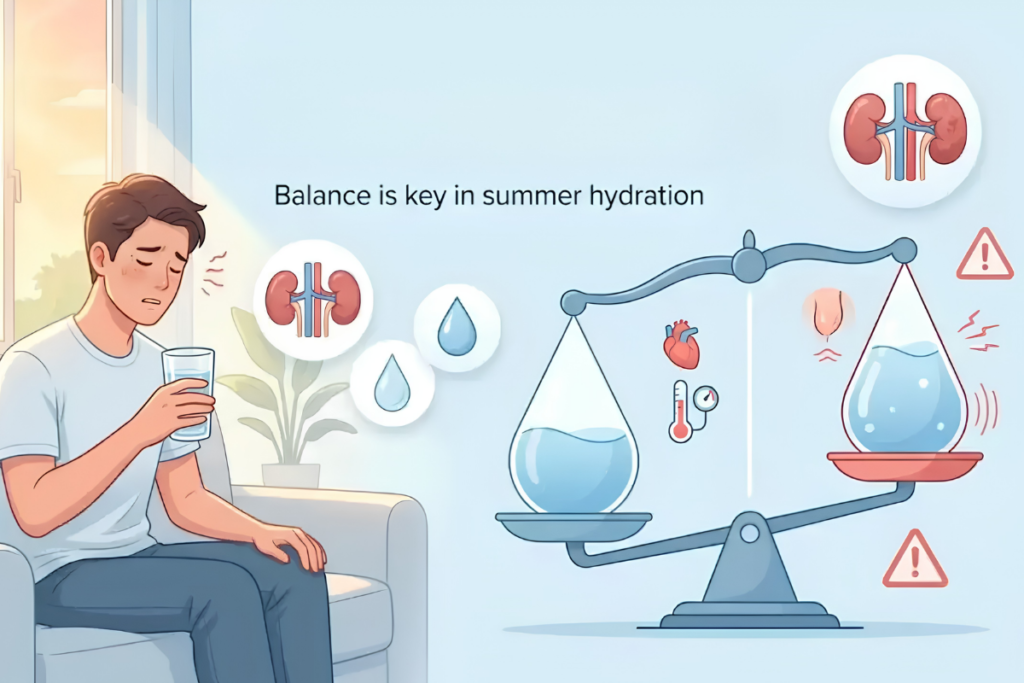
Every year, as temperatures climb across and the humidity settles in like an uninvited guest, hospital emergency rooms see a quiet but predictable surge. Kidney stone cases spike. Urinary tract infections become more frequent. Patients with chronic kidney disease find their condition harder to manage. And most of these cases share a common thread — not drinking enough water.
For anyone searching for a kidney specialist in Mumbai during the summer months, the visit often begins with the same question: Why didn’t I drink more water? The answer, unfortunately, is that most people simply don’t realise how hard their kidneys are working during the heat — or how much extra support they need during this season.
What Your Kidneys Actually Do — And Why Summer Stresses Them
Most people know the kidneys filter blood. But the full picture is more impressive than that. Every single day, your two kidneys filter about 200 litres of blood, remove waste products and excess minerals, regulate blood pressure, balance electrolytes, and produce urine to carry all of that out of the body.
To do all of this efficiently, the kidneys need a steady, adequate flow of water. When they have it, they work smoothly. When they don’t — especially in summer when the body is losing fluid rapidly through sweat — they begin to struggle.
The Summer Dehydration Cycle
Summers are particularly demanding. High temperatures combined with the city’s characteristic humidity mean your body sweats constantly, often without you fully noticing. Unlike dry heat, where sweat evaporates quickly and cools you down, humid conditions trap moisture on the skin. You sweat more, lose more fluid and electrolytes, and the cooling effect is less efficient.
The result is a body that dehydrates faster and more completely than most people expect — even without strenuous exercise, even while sitting in an office, even during an air-conditioned commute that ends with a ten-minute walk in the sun.
How Dehydration Damages the Kidneys Over Time
Acute dehydration — a single severe episode — can cause something called acute kidney injury, where kidney function suddenly drops. This is a medical emergency. But the more common and underappreciated risk is what happens with chronic, mild to moderate dehydration over weeks and months.
Kidney Stones: Summer’s Most Common Gift Nobody Wants
When urine is chronically concentrated, the minerals dissolved in it — primarily calcium, oxalate, and uric acid — start to crystallise. These crystals slowly grow into kidney stones.
Kidney stones are genuinely one of the most painful conditions a person can experience. The pain typically starts in the lower back or side and radiates downward toward the groin as the stone moves through the urinary tract. It’s been described by many patients as worse than a bone fracture — and unlike many injuries, it tends to come on suddenly, without warning.
Urinary Tract Infections (UTIs)
When urine becomes concentrated and low in volume, the natural flushing mechanism of the urinary tract slows down. Bacteria that would normally be washed out during urination get the opportunity to settle, multiply, and cause infection. UTIs in summer are extremely common — and while they’re often dismissed as a minor nuisance, untreated or recurrent UTIs can travel up to the kidneys and cause a more serious infection called pyelonephritis.
Worsening of Chronic Kidney Disease
For people already living with chronic kidney disease (CKD) — where kidney function is already reduced — summer dehydration carries a higher risk. Reduced fluid intake during hot weather can accelerate the decline of kidney function and trigger acute episodes on top of chronic disease. People with CKD need to be especially vigilant during summer and should discuss their specific fluid intake targets with their doctor.
Signs Your Kidneys Are Asking for More Water
The body sends clear signals when it needs more hydration — the problem is that many of these signs are easy to misread or ignore.
Pay attention if you notice:
- Dark yellow or amber urine — healthy, well-hydrated urine is pale yellow. Dark urine is a direct sign of concentration and insufficient water intake
- Urinating fewer than 4 times a day — reduced urine output is the kidney’s way of conserving water, which signals dehydration
- Dry mouth and persistent thirst — by the time you feel thirsty, you are already mildly dehydrated
- Lower back pain or a dull ache near the flanks — could indicate kidney stress or an early stone forming
- Swelling in the legs or face — paradoxically, dehydration can cause fluid retention as the body compensates
How Much Water Do Your Kidneys Actually Need in Summer?
The general advice to drink eight glasses of water a day is a reasonable starting point — but summer changes the equation.
During summer months, adults typically need between 2.5 and 3.5 litres of fluid per day, depending on their activity level, body size, and how much time they spend outdoors. People who exercise, work outdoors, or spend time in non-air-conditioned environments may need even more.
A practical benchmark: your urine should be pale yellow throughout the day. If it’s consistently darker than that, drink more.
Practical summer hydration tips:
- Start the day with two full glasses of water before tea or coffee
- Carry a water bottle wherever you go — if it’s in front of you, you’ll drink it
- Set gentle reminders on your phone if you tend to forget, especially during busy work hours
- Include water-rich foods in your diet — cucumber, watermelon, coconut water, and buttermilk all contribute meaningfully to fluid intake
- Reduce caffeine and alcohol during summer — both have a mild diuretic effect, increasing water loss
- If you’re sweating heavily, replenish electrolytes with coconut water or a light electrolyte drink — plain water alone doesn’t replace lost sodium and potassium
- Don’t wait until you’re thirsty to drink — thirst is a late indicator, not an early one
Protect Your Kidneys This Summer
Summer heat and dehydration can put extra stress on your kidneys, but simple daily habits like drinking enough water and eating hydrating foods can help protect them. If you experience recurring kidney stones, urinary problems, or dehydration symptoms, consulting a Nephrologist is important. Dr. Chandan Chaudhari provides personalised kidney care and guidance for patients in Mumbai, helping them maintain better kidney health during the summer months.