Diabetic Kidney Disease
(Nephropathy) Management Simplified
Diabetic Kidney Disease
(Nephropathy) Management Simplified
Diabetic Kidney Disease Treatment in Mumbai
What is Diabetic Kidney Disease?
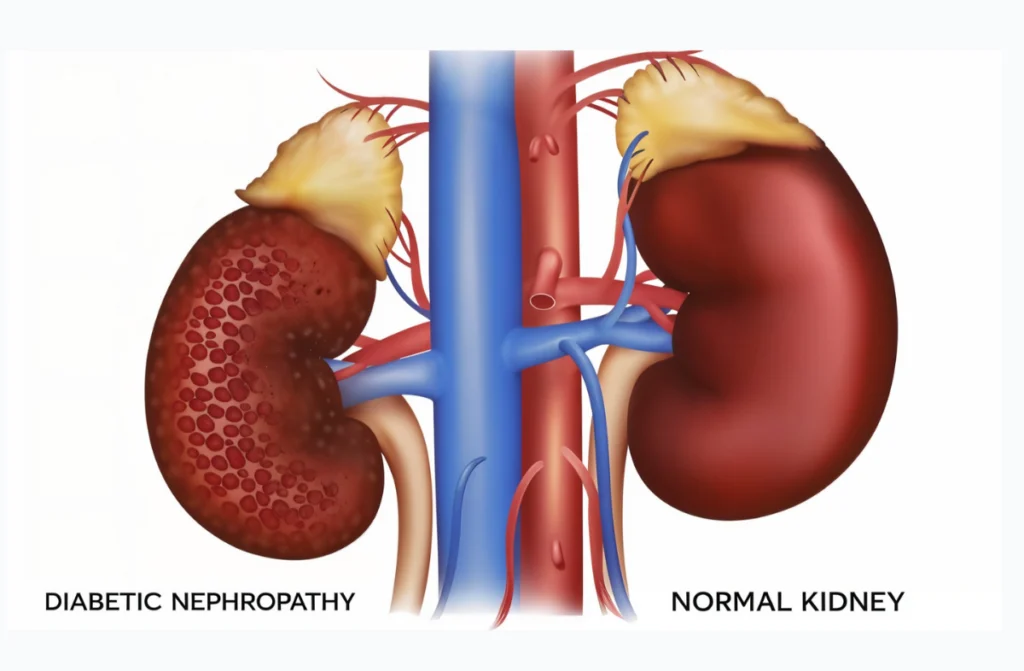
Diabetic kidney disease (also known as diabetic nephropathy) is a complication of diabetes that affects the kidneys’ ability to filter waste from the blood. High blood sugar levels over time can damage the tiny blood vessels in your kidneys, making them leaky and less efficient. This condition often develops slowly and may not show symptoms until the kidney function is significantly impaired. It’s one of the most common causes of chronic kidney disease and kidney failure, but early detection can slow or even stop its progress.
Affects people with both type 1 and type 2 diabetes
Progresses silently unless monitored regularly
Symptoms of Diabetic Kidney disease
Diabetic Kidney Disease may not cause noticeable symptoms in early stages, but as kidney function worsens, you may experience:

Swelling in the feet, ankles,
or around the eyes
Foamy urine
(due to excess protein)

Increased urination
or trouble urinating

Nausea or loss
of appetite
Fatigue and weakness
High blood pressure
SYMPTOMS OF DIABETIC KIDNEY DISEASE
Diabetic Kidney Disease may not cause noticeable symptoms in early stages, but as kidney function worsens, you may experience:
Swelling in the feet, ankles, or around the eyes
Increased urination or trouble urinating
High Blood Pressure
Foamy urine (due to excess protein)
Fatigue and weakness
Nausea or loss of appetite
Diagnosis of Diabetic Kidney Disease
Diagnosis begins with a detailed consultation, followed by these tests. Dr. Chandan takes time to explain each step, so you’re never in the dark about your condition.
Urine test to check protein (albumin) leakage
Blood pressure monitoring
Blood tests to measure kidney function (creatinine)
Kidney ultrasound or imaging
Stages of Diabetic Kidney Disease
Diabetic kidney disease develops gradually over several stages. Understanding where you stand helps in taking timely action. Each stage tells us how well your kidneys are working and how far the damage has progressed.
Stage 1- Normal
- Kidneys still work well but have small leaks of protein.
- eGFR ≥ 90
Stage 2- Mild decrease
Slight decline in kidney function, often symptomless.
eGFR 60–89
Stage 3- Moderate Decrease
- Noticeable symptoms like swelling, fatigue
- eGFR 30–59
Stage 4- Severe Decrease
- Kidneys are badly damaged; close monitoring needed
- eGFR 15–29
Stage 5- Kidney Failure
- May require dialysis or transplant planning
- eGFR <15
Treatment for Diabetic Kidney Disease
Blood Sugar Control
Keeping blood glucose within target range with medication, insulin, and a diabetic-friendly diet.
Blood Pressure Management
Using ACE inhibitors or ARBs to protect kidney function and control hypertension.
Protein Restriction & Kidney Diet
A personalized kidney-safe meal plan to reduce stress on the kidneys and avoid protein loss.
Regular Monitoring & Follow-ups
Continuous follow-up to track sugar, BP, kidney health, and early warning signs of deterioration.
Why Choose Dr. Chandan Chaudhari?
Dr. Chandan Chaudhari is the best doctor for diabetic kidney disease in Mumbai, focusing on prevention, control, and holistic management.
Expertise in Managing Chronic Conditions
With vast experience in treating diabetes-related kidney issues, he emphasizes early detection and personalized medication plans.
Highly Qualified Specialist
As an MBBS, MD, and DNB-certified nephrologist, Dr. Chandan offers advanced care that aligns with the latest medical standards.
Clear & Compassionate Communication
Dr. Chandan believes in honest, understandable conversations.
Empathy in Every Interaction
He explains conditions and treatments in a simple, caring manner, helping patients stay informed and confident.
Frequently Asked Questions [FAQ's]
about Diabetic Kidney Disease
We understand that kidney conditions can be confusing. Here are answers to some of the most common questions patients ask us.
Can diabetes really damage my kidneys?
Yes. Over time, high blood sugar harms the kidney’s filtering units, causing protein to leak into urine and reducing overall function.
How early can diabetic kidney disease start?
It can begin within 5–10 years of having diabetes, especially if sugar and blood pressure are not well-controlled.
Is diabetic nephropathy reversible?
While damage can’t usually be reversed, early treatment can prevent it from getting worse or slow it down significantly.
Can I avoid dialysis with treatment?
In many cases, yes. With proper sugar, BP, and kidney care, you can often avoid dialysis for many years or entirely.
Managing Diabetes? Don’t Forget Your Kidneys.
Start protecting your kidneys today before symptoms appear. Timely support can make all the difference.