
Low Energy and Fatigue: Is This a Kidney Related Problem?
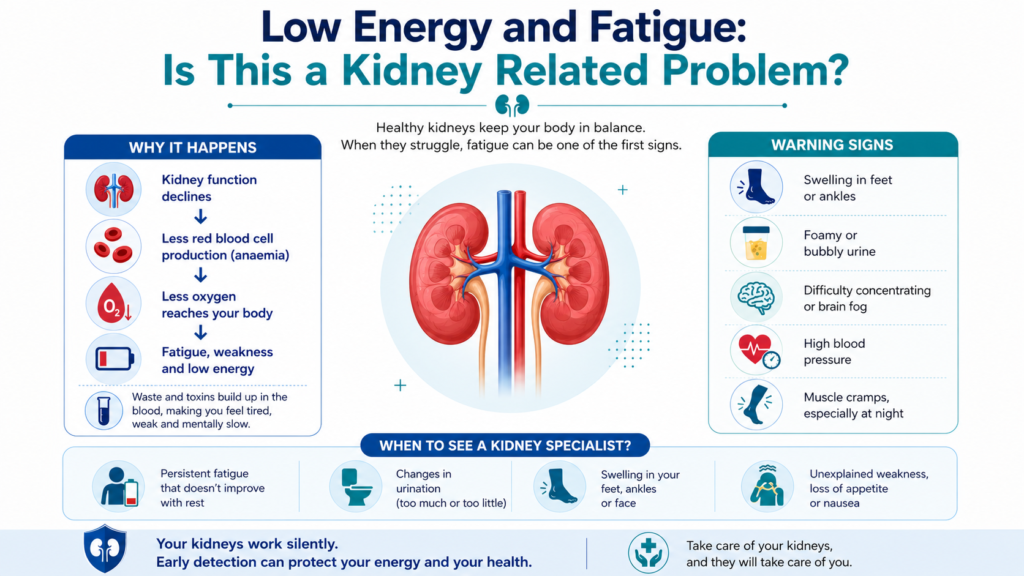
You wake up after a full night’s sleep, and somehow you’re still exhausted. You drag yourself through the day with zero energy, struggling to focus, feeling heavy and worn out for no obvious reason. Sound familiar?
Most of us blame stress, a busy schedule, or “just not sleeping well.” And often, that’s exactly what it is. But sometimes, persistent fatigue is your body’s way of waving a red flag, and your kidneys might be behind it.
This article will walk you through how kidney health connects to your energy levels, what warning signs to watch for, and when it’s time to see a Kidney specialist.
Why Your Kidneys Matter More Than You Think
Your kidneys are two fist-sized organs sitting quietly on either side of your spine. They work non-stop, filtering about 200 litres of blood every single day. That’s not all, they also:
- Remove waste and extra fluids from your body
- Help regulate your blood pressure
- Produce a hormone called erythropoietin (EPO), which tells your bone marrow to make red blood cells
- Balance important minerals like sodium, potassium, and phosphorus
When kidneys aren’t working properly, every one of these functions gets disrupted. And when red blood cell production drops, your body doesn’t carry enough oxygen to your muscles and brain, fatigue.
The Kidney–Fatigue Connection: What's Really Happening?
When kidney function declines, a condition called anaemia can develop. In simple terms, anaemia means your blood doesn’t have enough healthy red blood cells to carry oxygen around your body. Without enough oxygen, your muscles tire quickly, your brain feels foggy, and everyday tasks feel surprisingly hard.
On top of that, declining kidneys allow waste products to build up in the blood, a condition called uraemia. Think of it like your body’s internal filter getting clogged. That toxic buildup makes you feel drained, nauseous, and mentally slow.
This is why people with early or moderate kidney disease often describe fatigue as one of their very first symptoms, long before any obvious physical signs show up.
Other Signs Your Kidneys Might Be Struggling
Fatigue alone doesn’t mean your kidneys are in trouble. But if you notice a combination of the following symptoms, it’s worth getting checked:
- Swelling in your feet, ankles, or face, especially in the morning
- Foamy or bubbly urine: could indicate protein leaking into the urine
- Changes in how often you urinate: going more or less than usual
- Dry, itchy skin a sign of mineral imbalance
- Difficulty concentrating or “brain fog”
- Loss of appetite or feeling nauseous regularly
- High blood pressure that’s hard to control
- Muscle cramps, especially at night
None of these symptoms automatically means kidney disease. Many conditions can cause similar issues. But taken together, and especially if they persist, they deserve medical attention.
Simple Steps to Support Your Kidney Health
The good news? Your kidneys respond well to healthy lifestyle choices. Here are some practical things you can do starting today:
Stay well hydrated: Drink enough water throughout the day (around 8 glasses for most adults, unless your doctor advises otherwise). Hydration helps your kidneys flush out waste efficiently.
Watch your salt intake: Too much sodium forces your kidneys to work harder and can raise your blood pressure. Cook at home more often, and check food labels.
Keep blood sugar and blood pressure in check: If you’re diabetic or have hypertension, managing these conditions is the single best thing you can do for your kidneys.
Avoid overusing painkillers: Regular use of medications like ibuprofen and aspirin can damage kidney tissue over time. Use them only when necessary.
Eat a balanced diet: A diet rich in fresh vegetables, fruits, whole grains, and lean proteins supports overall kidney health. Limit processed foods and red meat.
Get regular check-ups: A simple blood test (creatinine, GFR) and urine test can detect kidney problems early, often before symptoms appear.
Don't Dismiss Fatigue - But Don't Panic Either
Tiredness is common. Most of the time, it’s linked to lifestyle factors, such as poor sleep, stress, dehydration, or nutritional gaps. But when fatigue is persistent, unexplained, and paired with other symptoms, it’s your body asking you to pay closer attention.
Your kidneys are silent workers. They don’t give dramatic warnings early on. That’s why listening to subtle signals like ongoing fatigue matters. A simple visit to your doctor, followed by basic tests, can either rule out kidney issues or catch them early when treatment is most effective.
Take care of your kidneys, and they’ll keep taking care of you.